Inside the home
On why urban firearm homicide has declined while intimate partner firearm homicide has not, the upstream pattern connecting mass shootings to domestic violence, and the household as the next frontier of firearm violence prevention.
Urban firearm violence in the United States ran approximately forty-four percent below its 2021 peak in 2025. The decline is real and worth celebrating. The investment that produced it is real. Community violence intervention programs, focused deterrence, hospital-based violence intervention, civilian credible-messenger work, and the policy work of the past decade have demonstrably reduced street-level firearm deaths. The trajectory of urban gun violence is the clearest evidence in twenty years that targeted, sustained intervention works.
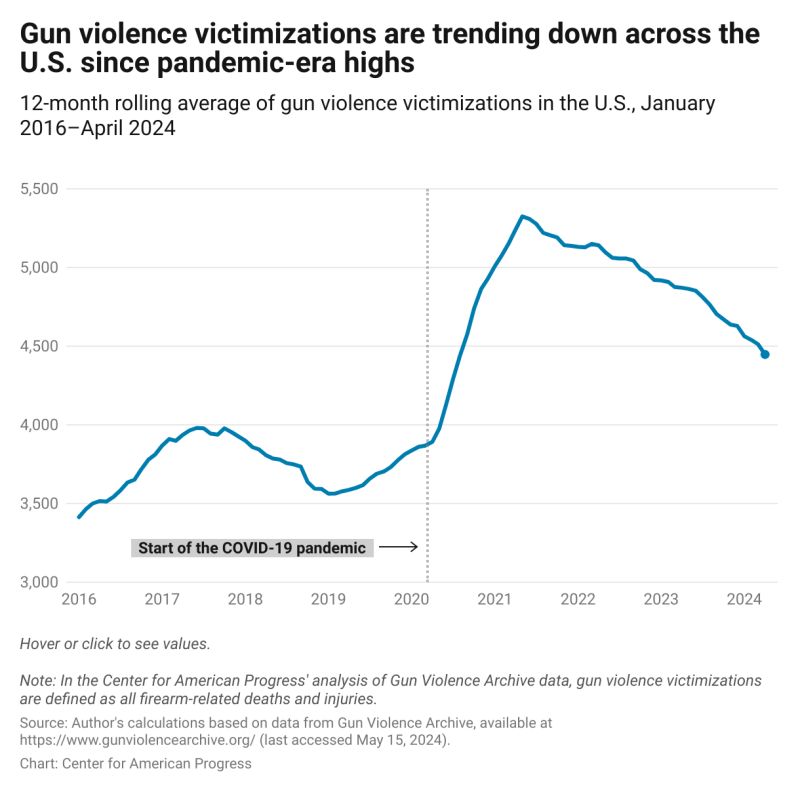
Intimate-partner firearm homicide has not followed the same line down.
The Centers for Disease Control and Prevention's National Violent Death Reporting System shows intimate partner firearm deaths in 2022 and 2023 still above 2019 baseline in most reporting states. The Violence Policy Center's annual When Men Murder Women analysis of FBI Supplementary Homicide Reports counts approximately 1,800 women killed by men in single-victim incidents in the most recent reporting year—a figure that has not significantly declined despite the broader homicide drop. The 2024 United Nations Office on Drugs and Crime joint report with UN Women documented approximately 83,000 women and girls killed worldwide in 2023, with approximately sixty percent killed by an intimate partner or other family member. Firearms remain the weapon in 55–60% of US intimate partner homicides.
The trend lines for mass shootings and nihilistic violent extremism run in a different direction still. Mass-casualty events with documented domestic violence upstream have not followed the urban homicide drop. Nihilistic violent extremism—encompassing online communities organized around contempt for women, racial animus, and the active celebration of mass violence—is a category domestic public health surveillance does not yet systematically track, and that law enforcement has been slower to recognize as structurally connected to gender-based violence rather than distinct from it. The FBI has developed some of the most useful operational resources on NVE currently available to practitioners. The convergence of these trends—intimate partner firearm homicide that has not declined, mass-casualty violence with DV upstream, and nihilistic violent extremism with misogynist roots—is beginning to draw the attention of analysts whose field of concern extends well beyond public health and criminal justice.
Femicide is becoming a larger share of remaining firearm deaths in the country.
The divergence
Different intervention chains explain why.
The urban firearm violence reduction came from a body of work specifically designed for street-level violence: identifying potential shooters and potential victims, intervening with credible messengers and trauma-informed services, deterring through focused enforcement, and treating gunshot survivors as the population at highest risk for re-victimization or future perpetration. Practitioners built the infrastructure around the assumption that violence happens in public space, between people who are not necessarily known to each other, and that the points of leverage are community, identification, and post-incident response.
None of that infrastructure reaches the household.
Intimate-partner firearm homicide happens inside a private residence in the overwhelming majority of cases. The perpetrator knows the victim—most often a current or former spouse, partner, or intimate. The risk has been escalating for months or years before the perpetrator discharges the firearm—along the predictable trajectory Naming femicide and Pattern readers address directly. The points of leverage operate upstream of the harm. Pattern recognition, documentation, court orders, firearm relinquishment, and coordinated multi-disciplinary response are the leverage points where intervention is possible.
The systems response built for one shape of violence does not transfer to the other.
The upstream pattern
The empirical record links mass shootings to domestic violence histories more consistently than any other variable.
The exact figures vary by study and by definition of "mass shooting," but the pattern is consistent. Geller, Booty, and Crifasi’s peer-reviewed analysis of fatal mass shootings in the United States between 2014 and 2019 found that nearly sixty percent involved domestic violence—either the shooter killed family or intimate partner victims, or the shooter had a documented history of domestic violence prior to the mass event. Zeoli and Paruk, examining 89 mass shooters, found that sixty-one percent had prior justice system involvement for domestic violence. Daniel Webster, Cassandra Crifasi, and colleagues have documented the same pattern across additional studies. The Sutherland Springs church shooting, the Orlando Pulse shooting, the Dayton mass shooting, the Plano sports bar shooting—many high-profile mass casualty events trace back to documented domestic violence histories in the shooter.
A man who has been violent to his partner is the strongest single empirical predictor of future mass-scale firearm violence the research has yet identified.
This is not coincidence. The architecture of coercive control—the will to dominate, the rage at perceived loss of control, the entitlement to violence against intimate others, the rehearsal of lethal capacity in a household context—is the architecture that produces mass violence when extended outward. The mass shooter pipeline runs through the household.
Mass shooting prevention and intimate partner femicide prevention share an intervention chain. They sit at different points along the same trajectory. A jurisdiction that builds the institutional capacity to recognize coercive control, document patterned escalation, enforce firearm relinquishment orders, and coordinate multi-disciplinary response is a jurisdiction that has built the upstream infrastructure for both intimate partner femicide prevention and mass-violence prevention.
The lethality literature
Femicide follows a predictable course. Three decades of research on intimate partner homicide, anchored by Dr. Jacqueline Campbell's Danger Assessment and Lethality Assessment Protocol and corroborated by a substantial body of work since, have established the warning signs that precede lethal intimate partner violence. Stalking. Non-fatal strangulation. Escalation involving firearms. Coercive control as the most reliable single predictor—more reliable than the frequency or severity of physical violence alone.
The work is not theoretical. Researchers have documented the patterns across two decades of case-control studies, fatality reviews, and risk assessment validation. Institutions have not yet built the muscle to recognize, document, and respond to them at the household scale.
The three indicators are also recognizable before they become final. Naming femicide sits the empirical record inside the political and legal work of categorizing the killing of women correctly. Financial abuse describes the form of coercive control most likely to survive separation and structure lethality risk in the months and years after the relationship has formally ended. The body of work is one argument carried across dispatches.
Because femicide is predictable, it is preventable. The empirical record has been clear for three decades. The institutions upstream of every femicide already possess the evidence base required to interrupt the trajectory. The remaining work is building the operational capacity to act on the evidence at the household scale, where the violence still rises.
What the next frontier looks like
The household is the next operational frontier of firearm violence prevention.
The intervention architecture required to reduce firearm deaths inside the home differs in structure from the architecture that reduced urban street violence. It requires pattern recognition, documentation, service of process, court order enforcement, firearm relinquishment infrastructure, coordinated multi-disciplinary response, specialized prosecution and judicial expertise on coercive control, and survivor-side economic security—each a distinct implementation challenge, each currently underdeveloped at the household scale.
The common thread is access—not the legal existence of a statute, but the operational infrastructure that converts statute into protection. These elements exist in pieces across the country. The work of building them into a coherent intervention chain comparable to what now reduces urban street violence by forty-four percent remains.
Legislation without implementation is performance art. The protection order statute exists; what is missing is the training, the enforcement hearing, the weapons surrender infrastructure, and the agency relationships that make the order mean something to the woman it was written to protect.
Much of the next wave of gun violence prevention work will deal not with guns at all. The operational work—enforcing relinquishment orders, building interagency relationships between local law enforcement and federal partners at ATF and the FBI, deploying existing laws with precision and persistence—is unglamorous, not expensive by the standards of the field, and quietly effective. It is also, at times, dangerous for the officers doing it and heartbreaking for anyone close enough to witness what it interrupts. The research is beginning to document what becomes possible when a jurisdiction actually builds this infrastructure. Ellyson, Kafka, and colleagues documented the result in Washington State: the Regional Domestic Violence Firearms Enforcement Unit, a specialized unit implementing the state’s protection order firearm relinquishment law with active interagency coordination, reduced crime among DVPO respondents by twenty-seven percentage points.
Agencies not historically considered core to gender-based violence policing—state patrol, SWAT teams, threat assessment units—are, as custodians of mass violence response and threat assessment infrastructure, among the institutions now carrying the most urgent need for current GBV training. The empirical record connecting domestic violence histories to mass-casualty events is no longer emerging. It is established. Threat assessment teams that do not carry that knowledge into their operational work are navigating with incomplete maps. The research coming out of public health and criminology on this intersection is substantial and growing rapidly. The professional discipline required is the curiosity to seek it out.
Haliruna offers training and consulting on each element of this implementation architecture—from pattern recognition for public-facing workforces to court-order enforcement infrastructure, interagency collaboration protocols, and prosecutorial and judicial training on coercive control. Engagement and partnership inquiries: inquiries@haliruna.com.
The rural and urban scale
The household pattern operates in both urban and rural geographies. The work I take on concentrates in rural counties—jurisdictions where formal first-responder infrastructure is thin, where the public-facing workforce is the early-noticer cadre, and where the warning signs go unflagged because no one has trained the public-facing workforce to recognize the patterns. The implementation gap between the legal architecture that exists and the operational reality on the ground is the precise gap this body of work addresses.
The argument extends to urban jurisdictions, too. The same intervention architecture—pattern recognition, documentation, enforcement infrastructure, multi-disciplinary coordination, specialized prosecutorial and judicial expertise, survivor-side economic security—applies wherever firearm homicide happens inside the home. Urban jurisdictions have more density of advocacy, legal aid, and prosecutorial specialization to draw on. They face the same gap at scale.
The next decade of firearm violence prevention in the United States depends on whether the household scale receives the same kind of deliberate, evidence-informed intervention investment that the past decade brought to urban street violence. The empirical foundation is in place. The legal architecture is in place in many states. The household scale has not been the focus of the investment that worked.
The next frontier is inside the home.
Selected sources
- Campbell, J. C., Webster, D. W., & Glass, N. (2009). The Danger Assessment: Validation of a lethality risk assessment instrument for intimate partner femicide. Journal of Interpersonal Violence, 24(4), 653–674.
- Campbell, J. C., et al. (2003). Risk factors for femicide in abusive relationships: Results from a multisite case control study. American Journal of Public Health, 93(7), 1089–1097.
- Centers for Disease Control and Prevention. (ongoing). National Violent Death Reporting System (NVDRS) Surveillance Reports. US Department of Health and Human Services.
- Geller, L. B., Booty, M., & Crifasi, C. K. (2021). The role of domestic violence in fatal mass shootings in the United States, 2014–2019. Injury Epidemiology. Springer.
- Zeoli, A. M., & Paruk, J. K. (2020). Potential to prevent mass shootings through domestic violence firearm restrictions. Criminology & Public Policy.
- Glass, N., et al. (2008). Non-fatal strangulation is an important risk factor for homicide of women. Journal of Emergency Medicine, 35(3), 329–335.
- Logan, T. K., & Walker, R. (2017). Stalking: A multidimensional framework for assessment and safety planning. Trauma, Violence, & Abuse, 18(2), 200–222.
- Myhill, A., & Hohl, K. (2019). The “golden thread”: Coercive control and risk assessment for domestic violence. Journal of Interpersonal Violence, 34(21–22), 4477–4497.
- Stark, E. (2007). Coercive Control: How Men Entrap Women in Personal Life. Oxford University Press.
- UNODC & UN Women. (2024). Femicides in 2023: Global estimates of female intimate partner and family-related homicides. United Nations Office on Drugs and Crime.
- Violence Policy Center. (annual). When Men Murder Women: An Analysis of FBI Supplementary Homicide Report Data. Washington, DC. vpc.org/studies/wmmw.
- Webster, D. W., Crifasi, C. K., et al. (various). Research on the intersection of domestic violence and mass shootings. Johns Hopkins Bloomberg School of Public Health, Center for Gun Violence Solutions.
- Ellyson, A. M., Kafka, J., Adhia, A., Shanahan, S., Bowen, D., & Rowhani-Rahbar, A. (2026). Crime reductions after enhanced implementation of Washington state’s domestic violence protection order firearm relinquishment law. Journal of Criminal Justice. Elsevier.
- Zeoli, A. R., & colleagues. (various). Research on intimate partner violence, firearm restrictions, and lethality. Michigan State University and collaborators.
Engagement and partnership inquiries: inquiries@haliruna.com.